
In Focus: Where agency margins are won – or lost in delivery
DBA Expert Manish Kapur looks at two places where design agencies tend to lose margin and why small changes can make a noticeable difference.

 GoSolr Brand Launch
GoSolr built a solar-energy brand from the ground up that has acquired thousands of users in a highly competitive, high-stakes category.
Xfacta worked end-to-end with GoSolr to create the distinctive brand world, intuitive digital tools and communications which framed solar as an upgrade to a modern way of living and achieved +1,013% revenue growth.

 Power outages have affected households and businesses across South Africa since 2007, but despite being the most viable solution to the nation’s energy crisis, low trust and awareness were keeping consumers from adopting solar power.
In November 2022 that changed with the launch of GoSolr. The business has reimagined the way solar energy is positioned and delivered in South Africa with a disruptive subscription model, and its brand world has driven trust with a hesitant public. Design was crucial to conversion and differentiation, and to how fast the model was scaled – there was a narrow window of less than six months to establish the brand and digital experience before its launch.
At the heart of the brand’s success in rapidly attracting and converting consumers is a confident and clear customer journey. From the first point of contact to installation, GoSolr’s brand world reassures users throughout the journey, removing jargon and fear from the decision-making process. The visual identity connotes warmth, optimism and reliability, three qualities the market lacked, earning over 100 million media impressions for the brand and shaping how competitors behave.
In a category where most of the competition feels technical and impersonal, GoSolr feels like a human service. At a time of national uncertainty, GoSolr has literally and emotionally given people power. Read more about Gold and Grand Prix winner: GoSolr Brand Launch >

The DBA Design Effectiveness Awards recognise and reward the integral role design plays in transforming businesses, improving societies and enhancing people’s lives. Judged by a broad range of business leaders, and entered jointly by client and designer, these awards are the most rigorous standard for measuring the effectiveness of design.
40 Gold, Silver and Bronze award winners were announced at The Design Effect on 10 March at the iconic National Gallery in London.
Congratulations to all the winning agency and client partnerships and thank you to our fantastic judges who brought their insight and experience to judge the entries this year, and to Sean Carney, Former Chief Design Officer at Philips, Trustee and Founder of Design for Good, and Strategic Advisor & Chair of the Future Lab Board at PASHA Holding for expertly Chairing the Judging.
Browse all the 2026 DBA Design Effectiveness Award winners’ case studies.








Understanding your positioning
Delivering benefits
Further resources
There will be no DBA Member Forum in April due to the Easter weekend.
Please do however join us for a webinar to launch Up to the Light’s 2026 ‘What Clients Think’ report on 14 April at 1.30pm. You can reserve your place today
The next DBA Member Forum will take place on Tuesday 5 May at 1.30pm BST (moving from our normal Monday slot to Tuesday, because of the bank holiday).

Most creative agency founders didn’t start their businesses to maximise profit. They started them to do good work – work they were proud of, work that clients valued, work that built reputations.
The tension tends to show up later. Many agencies producing strong creative work struggle to achieve consistent, healthy margins. Not because the work isn’t good enough, but because the commercial decisions that sit behind that work aren’t always managed well.
At the recent DBA Member Forum, I focused on two places where agencies tend to lose margin. They’re not the whole story, but small changes here can make a noticeable difference.
Many agencies lose margin before a project has even started.
This usually happens at the proposal stage. Work isn’t properly costed, assumptions aren’t tested, or pricing is adjusted downwards in an effort to stay competitive. The result is a project that looks viable on paper but is already under pressure the moment it kicks off.
A common mistake is reusing old proposals without understanding how those projects actually performed. If you don’t know where time was really spent, how many revisions were required, or where delivery became stretched, you’re guessing. Guesswork rarely leads to profitable outcomes.
This is also where timesheets matter. They’re the bane of most agencies because teams don’t enjoy filling them in, and leaders often question whether they’re worth the hassle. They’re there to tell you whether the work was priced accurately. If projects regularly overrun, the issue is usually scope, not delivery. Without that data, you’re pricing on assumptions rather than evidence.
There’s also a tendency to reduce the price while keeping the deliverables intact. This is where many projects start to unravel. If the budget is fixed, the scope has to flex. You have to cut your cloth accordingly.
Designers will always want more time – and rightly so. I’ve never had one say, “You’ve given me too much budget, take some back.” But time isn’t free. If the budget doesn’t stretch, the scope has to adjust.
This is why internal alignment matters so much at proposal stage. There needs to be an honest discussion with the delivery team about what can realistically be achieved within the budget – and a shared agreement that the team will stick to it. Without that buy-in, budgets become theoretical and overruns are absorbed later.
Strong proposals are honest documents. They align budget, scope and resourcing assumptions clearly, and they set expectations internally as well as externally. When teams are involved early and understand the constraints, staying within budget becomes a conscious decision rather than a constant battle.
Most agencies default to scheduling when what they really need is resource management. Scheduling is reactive – it deals with what’s already landed. Resource management looks ahead at demand, capacity and skills, and plans before problems show up.
To do that well, you need two things: visibility of upcoming work and a simple, agreed process for allocating people. Without those, you’re not really managing resources – you’re just fitting work into whatever gaps you can find.
The tool you use matters far less than getting that foundation right. Most agencies still rely on Excel because it’s flexible and familiar. Dedicated resource management software can help, but it won’t fix the underlying issue. Once the basics are in place, the tooling becomes secondary.
When this is working, projects start on time, teams aren’t stretched, and the hours you priced into the proposal are actually the hours you have available. That’s what protects margin. It also means you have the right talent on the right work, giving the team the time and headspace to deliver to a high creative standard – not just to hit the deadline.
The way work is scoped influences how it needs to be resourced. And how well it’s resourced determines whether the margin you priced in at the start survives delivery.
When agencies struggle with profitability, the symptoms are familiar – scope creep, the wrong skills on the job, and rework. The causes usually sit earlier, in how work is priced, planned and resourced.
Profitability isn’t about compromising creativity. It’s about setting work up properly so it can be delivered well on time and within budget.
In Focus: Staff cost to fee income ratio: DBA Expert Mike Almandras
In Focus: The people story behind the numbers: DBA Expert Aliya Vigor-Robertson
The DBA In Focus Report is the most comprehensive analysis of industry fees, salaries, utilisation, income, recovery rates, benefits and trends in the UK design sector.
In addition to the PDF report, members who participate in the survey gain access to dynamic, searchable data tables across key metrics for over 50 job roles, segmented by agency size and region.

When we look at metrics like gross income per head, utilisation and recovery rates in isolation, they feel like operational or commercial challenges. But when you step back and look at them holistically, these numbers are actually outcomes of how skills are structured, supported and deployed across your agency.
If these metrics are under pressure, it’s rarely just a pricing issue or a client problem. More often than not, it’s a signal about capability, role design or leadership capacity.
This matters because it changes where you look for solutions. If you’re treating falling productivity purely as a finance or operations issue, you’re missing what’s actually happening with your people.
Looking at agencies that completed the DBA In Focus survey in both years, headcount was down just 0.5%, but fee income per head fell by 2.1%. That’s the pattern that should concern us.
In theory, if you’re removing lower performers or consolidating roles, you’d expect income per head to at least stay steady, if not rise. The fact that it fell suggests that some agencies removed not just cost, but critical capability – the people driving income, managing client relationships, maintaining momentum.
The picture varies considerably from agency to agency. Some grew, some contracted significantly. But the overall pattern points to something important: last year’s restructures weren’t only a cost story, they were a talent and capability one. And that raises uncomfortable questions about which skills and responsibilities are most essential right now, and what happens when you lose them without a plan to redistribute or rebuild that capability.
Junior designers with under three years’ experience are earning £26,000 to £28,000, with some roles falling below the London Living Wage. That’s not just a pay issue; it’s an access issue.
If you’re a graduate with student debt, living in London or another major city, these salary levels make it extraordinarily difficult to begin a career in design. And while it’s encouraging to see more agencies offering internships, pay levels at entry point continue to limit who can realistically afford to join the industry at all.
The question we need to be asking is: what is this actually benefiting? Because access at the start of a career has a direct impact on long-term diversity, retention and ultimately, who ends up in leadership roles a decade from now.
If agencies are serious about building diverse teams, early-career pay needs to be part of that conversation. It’s not just about who you’re willing to hire; it’s about who can afford to say yes.
Women continue to hold only 37% of senior business and department head roles, and the gender pay gap widens significantly at senior levels. The contributing factors are worth restating.
Only 34% of agencies offer enhanced parental pay, and that figure drops to 15% among smaller agencies. These are understandably difficult commercial decisions, particularly for smaller businesses operating on tight margins. But the data reinforces something we see time and again in practice: support through parenthood plays a critical role in whether women stay, progress and ultimately lead within agencies.
This isn’t about judgment. It’s about recognising that structural factors, not individual capability, are shaping who gets to stay and who doesn’t. And if the outcome is that women consistently drop out at mid-to-senior level, we need to be honest about what’s driving that.
With only 58% of agencies planning pay rises this year, and fewer than half of small agencies doing so, pay pressure is clearly being driven by rising costs and tighter margins. But here’s what agencies often get wrong: when pay can’t move, the biggest risk isn’t the freeze itself, it’s a lack of clarity.
Agencies that are retaining their best people tend to be the ones that are transparent about constraints, progression and expectations, even in challenging conditions. People can handle difficult news. What they struggle with is ambiguity, particularly when it comes to their own future.
If you can’t offer a pay rise this year, that’s understandable. But have you told your team why? Have you been clear about when things might change, or what progression looks like in the meantime? Because in the absence of that clarity, your best people will start looking elsewhere.
Finally, while much of this data is retrospective, it’s difficult to ignore what’s ahead. AI is likely to have a significant impact on skills, roles and productivity over the next few years, and how agencies approach this will matter enormously.
The agencies that treat this as a people and skills challenge, not purely a technology or headcount one, are likely to be far better positioned for what’s coming. That means thinking carefully about which skills you need to build, which roles may need to evolve, and how you support people through that transition.
The pattern across all of this is clear: the agencies that will thrive aren’t necessarily the ones with the biggest budgets or the most aggressive growth plans. They’re the ones that understand their people challenges are their business challenges, and they’re addressing them as such. Because if last year taught us anything, it’s that capability is harder to rebuild than it is to lose.
In Focus: Where agency margins are won – or lost in delivery: DBA Expert Manish Kapur
In Focus: Staff cost to fee income ratio: DBA Expert Mike Almandras
The DBA In Focus Report is the most comprehensive analysis of industry fees, salaries, utilisation, income, recovery rates, benefits and trends in the UK design sector.
In addition to the PDF report, members who participate in the survey gain access to dynamic, searchable data tables across key metrics for over 50 job roles, segmented by agency size and region.
London Open House Festival | London, UK | 12-20 September | An annual celebration of London’s architecture and neighbourhoods, and the people and communities that make them. Find out more >
Material Matters 2025 | Space House, London, UK | 16-19 September | Exhibitors, installations and curated content exploring material intelligence in architecture and design. Find out more >
BFI Film Festival | London, UK | 7-18 October | Discover the world’s best new films, series and immersive storytelling. Find out more >
London Packaging Week | Excel, London, UK | 16-17 Sept | London’s home of packaging innovation and design. Find out more >
Dutch Design Week | Eindhoven, The Netherlands | 17-25 October | Nine-days bursting with creativity, mind-blowing ideas and celebrations. Find out more >
Discover! Creative Careers Month 2026 | Nationwide | November | An industry-led initiative designed to provide young people with encounters and experiences of the creative industries through in-school, workplace and online opportunities. There are several ways for individuals and companies to get involved. Find out more >
The events on this calendar are not delivered by the DBA and although we have provided topline dates and details, this isn’t an endorsement of the content. We recommend doing your own research before deciding to book.
If you’d like to suggest an event for this calendar, please email christina.warren@dba.org.uk with brief details.
Traction: Get a Grip on Your Business by Gino Wickman
Employee Ownership: A Guide to Transitioning from Boss to Benefactor by Simon Morton
Could Should Might Don’t: How We Think About The Future by Nick Foster
How to Think About AI: A Guide for the Perplexed by Richard Susskind
Business performance and profitability
Business development and differentiation
Talent, culture and people strategy
Operational effectiveness and efficiency
If you’d like tailored, strategic business advice, please do take a look at the DBA Experts Register. And why not consider booking yourself and your team a ticket to the Design Effect on 10 March to see how design is shaping organisations at a strategic level. The day is designed to create space to step back from day-to-day pressures and engage with the bigger picture together.
Our next DBA Member Forum is on Monday 2 March at 1.30pm GMT. Find out more and join us >
* The DBA In Focus benchmarking report is the most comprehensive analysis of industry fees, salaries, utilisation, income, recovery rates, benefits and trends in the UK design sector.


Mauro Porcini is Samsung’s President & Chief Design Officer—the company’s first-ever CDO, appointed in 2025 to lead human-centered innovation during a pivotal era shaped by AI. At Samsung, he oversees a global organization of 1,500 designers across mobile, display, TV, and home appliance businesses, with studios in Asia, Europe, and the Americas.
Before joining Samsung, Mauro served as the first Chief Design Officer at two global corporations: PepsiCo, where he spent 13 years building a world-class, 400-person design capability across 19 cities, and 3M, where he spent 10 years shaping innovation across multiple business sectors and regions. His leadership at both companies helped redefine the strategic role of design in large-scale, multinational organizations.
Earlier in his career, Mauro began at Philips Design and later co-founded the Italian design agency Wisemad, expanding his influence in Europe’s creative and cultural scene. His early work in wearable technology has been exhibited internationally, including at the Louvre in Paris and the Seoul Arts Center.
Mauro is also an accomplished author of The Human Side of Innovation (winner of the Gold Medal at the Better Future – New York Design Awards), L’età dell’Eccellenza, and Good Design is for Everyone.
Across his career, Mauro and his teams have earned more than 2,500+ global design and innovation awards and numerous international honors. Among his most meaningful distinctions is his title as Cavaliere dell’Ordine della Stella d’Italia—a Knight of Italy—bestowed by the President of the Italian Republic.

Lara is a leading technology broadcaster, journalist and author specialising in AI and health. For fifteen years she presented the BBC’s flagship technology programme Click, covering breakthrough innovations around the world. She fronted Panorama’s Beyond Human: Artificial Intelligence and Us, and has hosted tech specials for ITV’s Tonight, BBC Radio 4’s Woman’s Hour and other major outlets, exploring how artificial intelligence, science and innovation are reshaping our everyday lives. As ITV Lorraine’s resident “AI Agony Aunt,” she regularly demystifies the challenges and possibilities the digital world brings.
Passionate about helping people navigate a fast-changing world, Lara is known for bringing complex technology to mainstream audiences. Her critically acclaimed book Hacking Humanity (Penguin, 2025) reveals the coming revolution in health, where we can understand, track and predict our bodies’ needs like never before, close the gap between ‘healthspan’ and lifespan, and personalise prevention and treatment for a radically healthier future. She’s also produced and presented several BBC documentaries on the topic, unearthing the real promises of the longevity revolution, and the science that could drive us to age better.
Before joining Click in 2011, Lara’s media experience was vast and varied. She was the technology columnist for the UK’s biggest selling weekly magazine, Woman, for four years, and has written for numerous other publications.
 Patricia Moore is an internationally renowned designer and gerontologist, serving as a leading authority on consumer lifespan behaviours and requirements. For a period of four years (1979-1982), in an exceptional and daring experiment, Moore traveled throughout the United States and Canada disguised as women more than eighty years of age. With her body altered to simulate the normal sensory changes associated with aging, she was able to respond to people, products, and environments as an elder.
Since 1990, Moore has designed more than three hundred physical medicine & rehabilitation environments for healthcare facilities throughout North America, Europe, China and Japan. A frequent international lecturer and media guest, Moore is the author of numerous articles and the books DISGUISED: A True Story, Ageing, Ingenuity & Design [2015], and OUCH! Why Bad Design Hurts [in works]. Her broad range of experience spans multiple disciplines of design, working with major corporations.
Moore holds undergraduate degrees in Industrial and Communication Design from the
Rochester Institute of Technology Advanced Studies in Biomechanics at NY University’s Medical School and graduate degrees in Psychology and Gerontology from Columbia University.
Holding a huge range of awards and honours from throughout her career, the World Design Organisation selected Moore for the World Design Medal, presented at the 2023 World Design Congress in Tokyo. Moore is the 2024 recipient of the Sir Misha Black Medal for her significant contribution to design education throughout her career.

Aporva Baxi is Co-Founder and Executive Creative Director of DixonBaxi, the global brand agency he leads with long-time creative and business partner Simon Dixon and a world class team of strategists, designers, writers, and makers. The agency helps some of the world’s most ambitious companies navigate moments of change, creating brands with clarity, character, and distinction that are built to perform at scale.
Their studio moves across culture, sport, entertainment, and technology, partnering with organisations such as Roblox, Formula One, ESPN, G42, Tubi, AC Milan, ITV, IMAX, Eurosport, Audible, Netflix, British Land, MTV, and Samsung. Their work is focused on building brands that stay relevant, adaptive, and ready for the future. Brands that draw on their equity, embrace invention, and remain unmistakably themselves as they grow.
He is committed to an open approach to practice through initiatives such as The DixonBaxi Way, Journeys, and the 500 page book REMIX, developed to support creative teams and leaders across the industry.
Aporva serves on the boards of The One Club for Creativity and the Art Directors Club in New York, has judged on the D&AD, Clios, Transform Branding Juries, and speaks internationally at events including D&AD, ADC and OFFF.
He believes meaningful transformation strengthens what makes a brand matter and gives it the imagination and clarity to lead its future.
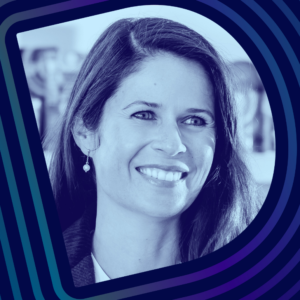
Stephanie is a marketing specialist and business leader in brand & innovation strategy and creative development. As Head of New Digital Solutions & Design at NatWest Group she is responsible for customer experience design across the full user journeys in Commercial, Institutional, and international markets, across the NatWest Group’s portfolio of brands.
Prior to joining NatWest Group Stephanie led Reckitt’s design and brand communication across consumer touch points, design led innovation (new products and business models) and delivering world class customer experiences for a wide range of well known global brands (e.g. Dettol, Durex, Enfamil). Stephanie was also the business owner for RB’s global artwork management process & system. She was instrumental in building a global strategic design management team in Reckitt’s global headquarters.
Before Reckitt, in 2008, she worked as a lead designer and creative strategist for The Walt Disney Company creating branding, packaging, point-of-sale and digital solutions covering consumer products in fashion, food, stationary, home & toy categories for both the Disney & Pixar group of brands. Based in Los Angeles GHQ with subsequent moves to Munich and London.
Stephanie holds an MFA in Graphic and Interactive Design from the California Institute of Arts (Fulbright Scholar) and a BFA in Graphic Design, Video & 3D from the Arnhem Institute of Arts in the Netherlands. She has been the recipient of many global industry awards such as the Red Dot Product Design Award, the DBA Design Effectiveness Award, IF Gold Packaging Award and Dutch Best Book Design award. Stephanie is a driver of diversity and female leadership.

Simon spent the first half of his career in creative leadership roles in highly renowned Brand Design agencies, most notably FITCH where he was a Creative Director, working with brands in the UK, USA, ASIA and the Middle East.
He delivered effective and award-winning design led brand change for clients such as LEGO, M&S, Tesco, Sainsbury’s, Walmart, Target, Orange, Central Food Thailand, Selfridges, Sony, HSBC.
Since joining Tesco in 2010 Simon has held several Brand Design Director roles delivering change across many aspects of the Tesco customer experience. Group masterbrand development, store environment, packaging, marketing communication content creation.
As a long-standing member of the Customer Leadership team, Simon was an integral member of the team who worked on the Tesco brand turnaround plan.

Mark van Iterson is an industrial design engineer by education.
After 13 years at brand design agency and innovation consultancy side, Mark joined the HEINEKEN Company in 2005 as Global Design Director. His main focus was the responsibility for all brand-identity design, packaging and POS developments for the Heineken® brand worldwide. In the rather traditional beer category, Heineken sets itself apart by its progressive and innovative drive. Design and innovation are a fundamental part of the strategy to enhance and elevate the beer experience, build iconic brand equity, create future business concepts, and engage and excite consumers. As of 2016 Mark was also responsible for making environmental sustainability an integral part of the Heineken brand and its design.
In 2023 Mark and his design team took on the responsibility for elevating the role of design for all brands and innovations in the HEINEKEN company portfolio. This meant ‘building the design muscle’ for global brands like Amstel, Desperados, Tiger, Birra Moretti, Strongbow, and also for dozens of local jewels such as Cruzcampo, Dos XX, Bintang, Zlaty Bazant, Red Stripe, Windhoek, etc.
Next to this, Mark is a frequent lecturer, speaker and juror, for example for Cannes Lions, D&AD, Pentawards, Dutch Design Awards, and DBA.
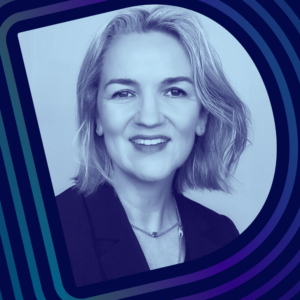
Kathleen Brandenburg is an internationally recognized founder, thought leader, educator and speaker on the global stage. Kathleen has devoted her career to elevating design as a strategic value for business, organizations, and society. In 2000, she co-founded the global design innovation consultancy IA Collaborative to bring design process and methods to a wide range of industries and sectors, regardless of complexity or scale, and often those traditionally not associated with design.
Today, Kathleen is leading the conversation to elevate design’s impact even further, championing it as the way solve our world’s most urgent problems. A Harvard Visiting Professor of Design for Social Innovation, she is at the forefront of a movement to change the way healthcare understands and applies design, and is the author of Design for Health: The Beginning of a New Dialogue Between Design and Public Health.
Applied to society’s greatest challenges, Kathleen believes that a design approach can be world-changing. Recently nominated by The Smithsonian Cooper Hewitt as Visionary of The Year, Brandenburg has also been named a Master of Design and one of the 50 Most Influential Designers in America by Fast Company. She serves as an Illinois Tech trustee and the board of overseers at the Institute of Design, and is a sought-after speaker on the value and impact of design.

Christina Harrington is a designer and qualitative researcher who works at the intersection of interaction design and health and racial equity. She combines her background in electrical engineering and industrial design to focus on the areas of universal, accessible, and inclusive design. Specifically, she looks at how to use design in the development of products to support historically excluded groups such as Black and LatinX communities, older adults, and individuals with differing abilities in maintaining their health, wellness, and autonomy in defining their future.
Christina is a Research Scientist on the Technology, AI, Society and Culture Team at Google Research and was a Visiting Faculty Researcher on the responsible AI Human Centred Technology UX team at Google.
Christina is passionate about using design to centre communities that have historically been at the margins of mainstream design. She looks to methods such as design justice and community collectivism to broaden and amplify participation in design by addressing the barriers that corporate approaches to design have placed on our ability to see design as a universal language of communication and knowledge. Dr. Harrington is an Assistant Professor in the HCI Institute at Carnegie Mellon University and the Director of the Equity and Health Innovations Design Research Lab.
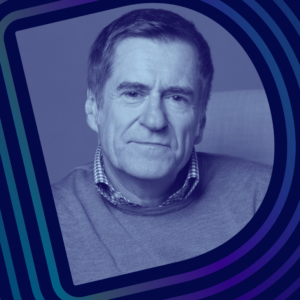 Mark Curtis is a serial entrepreneur and pioneering design strategist defined by bridging emerging technology with human needs. He co-founded Fjord in 2001, scaling it into a global design powerhouse before its acquisition by Accenture in 2013.
At Accenture, Mark shaped Accenture Song, leading Innovation and Thought Leadership while establishing a Global Sustainability studio. He created the renowned “Life Trends” report and published the book “Distraction” (2005).
Previously, he founded CHBi (sold to Razorfish) and pioneered mobile freemium models as CEO of Flirtomatic. He remains a trusted advisor to executive boards on digital transformation. He now publishes and podcasts weekly as part of Full Moon (www.wearefullmoon.com).
 Nicola has spent more than two decades in the design industry, most of them at creative and digital agency HMA, where she has played a central role in shaping the agency’s growth and strategic direction. Under her leadership, HMA has developed a strong specialism in health, life sciences, and technology, delivering impactful work for NHS organisations, third-sector partners, start-up innovators, global pharmaceutical companies, and academic research teams.
She also contributes to the wider health-tech innovation landscape, delivering masterclasses and mentoring on digital health accelerator programmes and, more recently, helping to strengthen collaboration between industry and academia through her role on the industry sub-committee for the NIHR HealthTech Research Centre in Long-Term Conditions (Devices for Dignity).
Passionate about nurturing future talent and highlighting the breadth of careers within the creative and digital sectors, Nicola works closely with local schools and colleges – integrating digital components into design courses, setting live briefs, conducting mock interviews, and taking part in careers events and panel discussions.
Making the first move
Mitigating risks
Client relationships
Our next DBA Member Forum is on Monday 2 February at 1.30pm GMT. We’ll be turning our attention to the DBA In Focus report – the benchmarking report built exclusively from members’ business data. Five DBA Experts will join us to share what stood out for them in their specific areas of expertise. Find out more and join us >