
DBA Member Call to Action on Future Talent
Making sure the design industry has the right design skills for the future we need to design is critical and we're calling on DBA members to make a commitment.

 For a prospective buyer, those questions go to the heart of value. An agency can have outstanding work, loyal clients and healthy profits, yet remain difficult to acquire if too much depends on one person.
The challenge is to turn the founder’s contribution into something the business can sustain. That preparation takes time and it improves the agency long before a sale is contemplated.
What buyers are really buying:
Buyers assess past performance to understand what to expect after an ownership change. They want confidence that clients will stay, the team will deliver and the agency can continue to win profitable work.
A distinctive position helps: a clear reason why clients choose you, supported by evidence of the commercial impact of your design work. So do durable client relationships, a credible pipeline and profits that convert into cash.
Revenue quality matters alongside its size. Repeat project work can be attractive where there is a convincing history of renewal, although it does not offer the same certainty as contracted income. Heavy reliance on one client creates a vulnerability, however strong that relationship feels.
Buyers also examine how profits are generated. If the founder performs several senior roles at a modest salary, the cost of replacing that contribution may reduce the sustainable earnings on which an offer is based.
Founder dependency can therefore affect price, deal structure and the period for which a buyer asks the founder to remain. A profitable agency is more compelling when there is evidence that its performance can transfer.
 A second-tier team needs more than impressive job titles. Buyers want to see people who already lead client relationships, make commercial decisions and take responsibility for results.
In a smaller agency, this need not mean recruiting an expensive management layer. It may begin with giving existing colleagues clearer ownership of client service, creative delivery and financial performance, with support where capabilities need strengthening.
Authority must accompany responsibility. If every fee proposal, creative recommendation and difficult conversation still returns to the founder, little has changed.
Agree on which decisions colleagues can make independently, when consultation is needed and when an issue should be escalated. Then allow them to exercise that judgement. Constantly stepping back in teaches both clients and staff that the founder remains the only person who counts.
Clients often buy into the founder’s judgement and personal commitment. Transferring that trust requires a deliberate introduction to other people’s expertise.
Give senior colleagues visible roles in strategic discussions, presentations and account planning. Let them lead meetings and develop relationships with several stakeholders inside each client organisation. The founder can remain involved while making it clear that the wider team has their confidence.
Apply the same approach to new business. Track where opportunities originate, who converts them and whether the agency can win without the founder leading every pitch. A pipeline recorded only in the founder’s memory gives a buyer little reassurance.
For design businesses, reducing dependency also means sharing creative judgement. Document how you interrogate a brief, develop recommendations and assess whether the work meets your standards.
This should help colleagues understand the reasoning behind decisions, while leaving room for their own ideas. Regular reviews, mentoring and shared case studies can make the agency’s expertise more widely available without turning creativity into a rigid formula.
Reliable management information supports that freedom. Leaders need to understand project margins, capacity, scope changes and cash collection so that excellent work also produces a healthy business.
 Over the next 90 days, identify the three activities most dependent on you. For each, appoint an owner, agree on decision limits and set a practical measure of progress. That might be a colleague leading a key account review, approving proposals within agreed margins or running the monthly financial meeting.
Test progress through planned absences. Start with a few days, then extend them. Record what stalled and why. Use the findings to improve the handover, rather than simply taking everything back.
Buyers will place more weight on a team that has demonstrated independence over time than on a succession plan assembled shortly before a sale.
You do not have to be planning an exit to benefit. An agency that depends less on its founder creates more room for growth, gives talented people reasons to stay and provides its owner with greater choice.
The question to ask now is simple: how much of the value you have created can your business carry forward without you?
“100%, it’s helped to shape my thinking about how we can continuously look to improve the business at every juncture.”
The DBA’s Twenty/Twenty mentoring programme offers a valuable space to grow, connect and contribute. Crafted for leaders in design looking to make their next big leap, many agency founders have embraced the mentoring for themselves and their senior team.
Applications are open now and close on 9 December 2026.
“This process immediately benefitted my new position – I was able to have challenging conversations that I might have previously shied away from.” Imagine what you could do with a mentor by your side. Find out more and speak to one of the team.
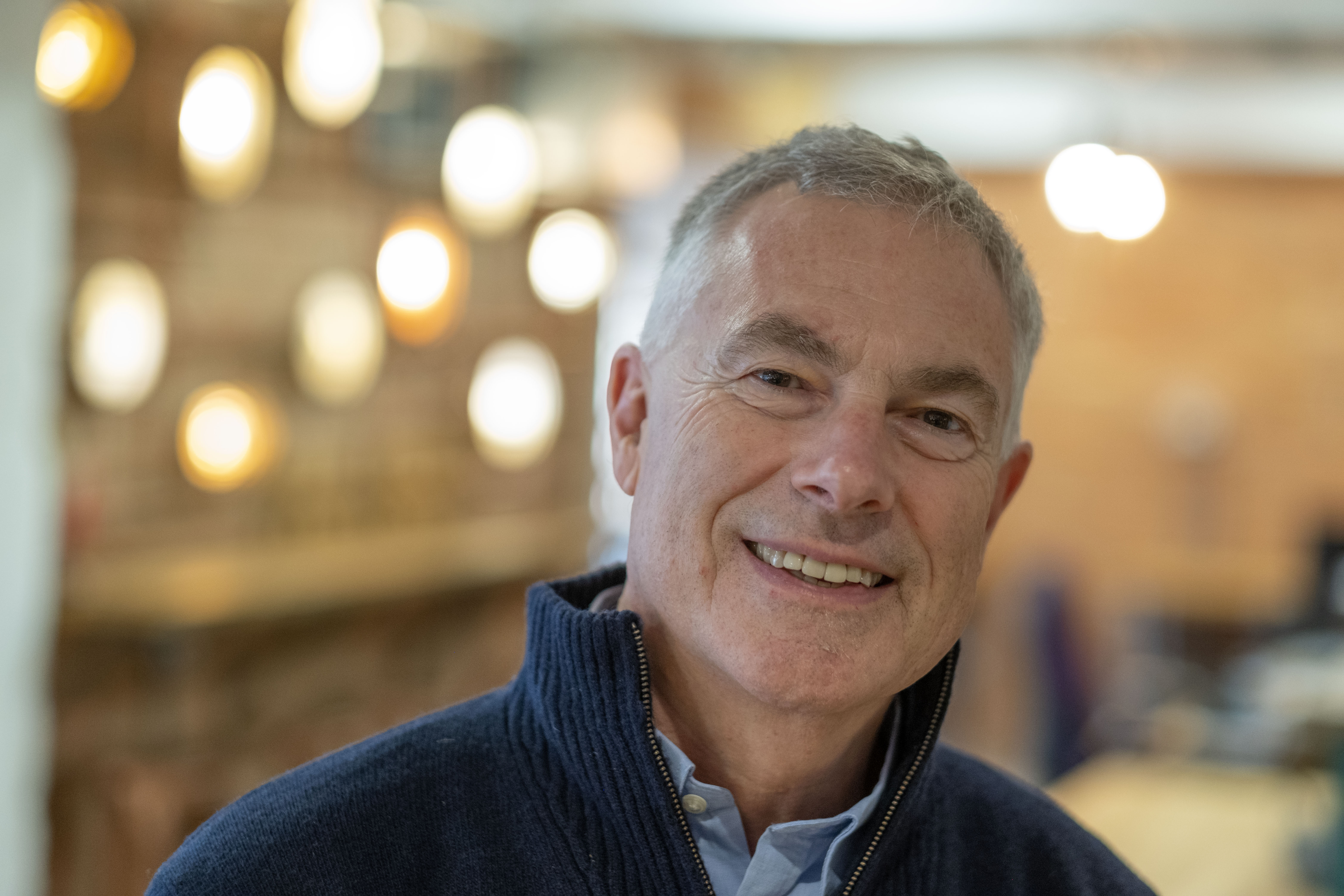
David is a Founder and Managing Partner of M&A Advisory, a niche firm that executes M&A transactions on behalf of clients, with a sound business and cultural fit to maximise value.
M&A Advisory focuses on the marketing communications, design, and digital sectors. It represents clients across the globe and uses a combination of sound business experience and exceptional market knowledge and connections to ensure that transactions are optimised. Compatible culture and business fit are prioritised, along with strong negotiating skills to ensure value is maximised.
David is an accredited DBA Expert.
Image credits: Jakub Żerdzicki | Johannes Plenio | Ellephant | Unsplash







 Having a mentor with a vast wealth of experience, who helps you better understand the opportunities for your business and to tackle your fears in a supportive, exploratory way, can help you take a firm control of your agency’s future and deliver transformational results.
“Speak to previous cohorts and I guarantee you’ll jump on it like a shot.” That’s the advice a previous Twenty/Twenty mentee gave to anyone considering the programme, and here’s what a few others had to say about the experience:
“I couldn’t recommend it more highly.”
“Genuinely pivotal.”
“Investing in yourself is one of the most effective things you can do.”
“As a business owner with vision, goals and struggles, the value of being able to learn from, and bounce ideas off someone who has already walked a similar path can only be beneficial.”
“Almost every session reveals something that is incredibly helpful, insightful or that was hidden in plain sight!”
The Twenty/Twenty programme is crafted for leaders in design looking to make their next big leap. Whether you’re focused on strategic growth, succession planning, scaling your business or the design function within your organisation – or something entirely different, imagine what you could do with a mentor by your side. Here are just a few of the reasons previous mentees have signed up:
“I felt I could do with some external advice and input to help us gear up for our next phase.”
“I was at a stage in my business where I wanted to grow it, but I needed to grow myself first.”
“My 60th birthday was coming up in a few years’ time, and I wanted to explore complementary or even different career paths in a safe space, and with someone who could help me realise what I wouldn’t be able to see for myself.”
“At 31 years old, I had spent most of my career in one agency and I really felt that I needed some external guidance and inspiration, some input and support that came from a different context.”
“The opportunity to learn from someone vastly more experienced at running a design business was too good to pass up.”
“Twenty/Twenty mentoring helped grow my confidence tenfold.”
“Mentoring helped me navigate some particular business challenges at a time when I didn’t have many answers to them.”
“For me, the access and exposure I got to another creative business through the programme was as impactful as the relationship I built over the year. I came away from the experience with a whole network of new contacts and learning, many of whom I am still in good contact with today.”
“This process immediately benefitted my new position – I was able to have challenging conversations that I might have previously shied away from.”
“Speaking to someone with deep expertise and experience, who has been through it all, provides incredible context.”
“Our conversations gave me both practical advice and reassurance that was invaluable in the coming years.”
“I would whole heartedly recommend the experience not only from a personal development standpoint, but also in terms of return on investment to the business.”
DBA mentors are industry icons – visionaries from renowned DBA member businesses who bring a wealth of experience and a unique perspective. Our extensive matching process ensures you’re paired with a mentor whose journey aligns with yours, creating a truly impactful partnership. Our mentors come from organisations including: 2LK Design | Chaos Design | Coley Porter Bell | Design4Retail | ECHO | Else | PB Creative | Nestlé and many more.

“The Twenty/Twenty programme is a win/win for both mentees and mentors.”
Eric Quint, former Chief Design Officer at 3M and previous DBA Twenty/Twenty mentor.
Step into the next stage of your career and unlock your full potential. Full details about the programme can be found here.
DBA members benefit from a reduced rate to participate in the programme. DBA members: £1999+ vat | Standard: £3500+ vat.
Applications are open, closing on 9 December 2026. Apply via this form or get in touch with Natasha Papa to discuss the programme.
Last year’s rise sets the expectation
Once people have had a good rise, they expect the same or more the following year. A smaller one feels like a step backwards, even when the agency has had a harder year, and that makes it difficult to say no. Be clear from the start that each year’s rise depends on how the agency and the individual have performed, and that last year’s figure doesn’t set this year’s.
Keep pay rises in line with fee income
Pay rises need to stay in line with fee income. A 6% rise in an agency where fees grew 6% is neutral. The same rise in an agency with flat fees comes straight out of profit.
Fee income per head is a better measure than total fee income. An agency can grow fees by adding people and be no better off. Another can keep the same headcount, improve its pricing and scoping, and afford to pay people more.
The rule of thirds
Start with what a person costs you per hour – salary, employer’s NI and pension. Say that comes to £30 per hour. Add another £30 to cover overheads and another £30 for profit. That gives you an hourly rate of £90. It’s a guide rather than a law, and plenty of healthy agencies sit some way off it.
Review your rates every year
If staff costs go up every year and your rates stay the same, your margin pays for it. A 5% rise on a £30 an hour staff cost is £1.50 an hour, which is less than a 2% rise on a £90 rate, so even a small rate increase covers it.
Tell clients upfront that you review rates annually. Put it in the proposal or contract, so the increase is expected rather than a surprise.
 A simple structure for pay rises
Start with the agency. Decide how much the business can afford to put into pay before you talk to anyone. That depends on how the agency has performed over the year, including fee income, profit and whether your rates cover the increase.
Then look at the individual. Use the evidence from their appraisals to decide how that budget is shared out, rather than giving everyone the same percentage. Any exception for a critical role then comes out of the same budget, or is agreed openly as a separate decision, so you know what it costs.
Progression matters as much as pay
Pay isn’t the only reason people leave. If someone can see how they’ll grow their career at your agency, a call from a recruiter is much less tempting.
Cost of living means you may still need to pay a bit more. But if your best people are growing professionally, they’re less likely to leave for a little extra money elsewhere. That’s where the yearly appraisal is key. Use it to talk about where each person wants to get to, what they need to do to get there and how you’ll help.
Keeping pay fair when you’re protecting key people
Often the biggest rise goes to the person looking after your biggest client, usually because the owner can’t afford to lose them. That’s understandable. The risk is that others find out, nobody has explained why, and they assume it’s favouritism.
A few things help:
Sometimes you’ll need to bite the bullet and pay more for a role the agency can’t afford to lose. You can’t do that for everyone, so the rest needs a structured process, with rises tied to individual performance and what the agency can afford.
Before you increase salaries, make sure you’re charging clients enough to cover it. Putting rates up can be a difficult conversation, but if you don’t, you’ll end up eroding your margin.
 Pay rises, international work, charge-out rates, agency income and business confidence were on the agenda at our October Member Forum. A summary of the conversation is available here.
Members can also login and take an in-depth look into the DBA In Focus Report 2026 via the microsite, and a special report, which focuses on Salaries to Charge Out Rates, is available in our library of Resources. Our next Member Forum will be held on 2 November, 1.30-2.30pm GMT.
If you are not yet a DBA member and would like immediate access to the most comprehensive financial benchmarking tool in design, join the DBA today.

Manish helps design agencies fix the operational problems that are holding you back – from poor resource planning and low margins to broken processes and team burnout.
With over 25 years’ experience in agency operations, he brings a mix of strategic thinking and hands-on practicality. Manish doesn’t just give advice – he rolls up his sleeves and works alongside founders and leadership teams to diagnose what’s not working and implements changes that stick.
Manish is an accredited DBA Expert.
Image credits:
Kanhaiya Sharma | Unsplash
Lifang1025 | Dreamstime
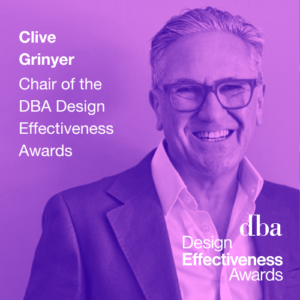 I’ve had a break from my involvement but am delighted to have been appointed again as DBA Design Effectiveness Awards Chair and dust off my gavel for this year’s judging sessions.
The sessions are intense, rigorous and hugely enjoyable as we hear the expertise and wisdom of the judges – a spread of executive talent who are innovators, past winners and business leaders from global corporates to solo entrepreneurs. They bring rigour, of course, but most of all they bring enthusiasm and delight in discovering stories of how design has delivered exceptional results, beyond the ambitions and hopes of each organisation, in whatever way they measure success.
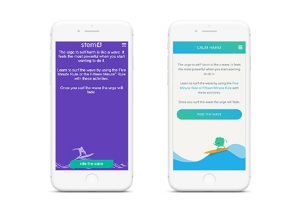
Coming back as Chair, I’m reminded of some of the great projects I have seen – brands, businesses, services, products, experiences – all revitalised by a belief in design. The mental health app that achieved global impact when redesigned. The plastic free chewing gum that changed the market. The library and the gym that smashed their targets for increased footfall and usage. The health tool that has had a profound effect on maternity care.
In every case I see the rigour and attention to detail of the judges to make sure that design is at the core of the success. They take pride in identifying case studies that demonstrate the power of design, ensuring that no hidden away advertising or channel extensions are the cause of business performance. They look out for the massaging of the message by overenthusiastic marketing teams, interrogating how the application of creativity has fuelled market performance.
 |
 |
 |
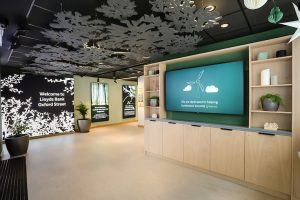
Over the years it’s been fascinating to see the greater diversity of entries and how their success is measured. Apps, services, agencies and in-house teams measuring impact not just in sales or profit but through sustainability, engagement, footfall, efficiencies, brand recognition and by many other means. Effectiveness will reward the sales impact of a drinks brand’s packaging as much as behaviour changes brought about by a public service campaign, or the net promotor score of a bank branch.
My favourite projects are where design discovers something new, something different from the original brief. Design is craft and a skill but it’s also a process, where seeing the customer view, looking forward to future trends, understanding the market, audience and their context can uncover new opportunities and possibilities that weren’t expected. Exploration, going beyond the brief and finding epiphanies from customer insight, can lead to transformational innovation and competitive advantage with beyond predicted business results.
The DBA Design Effectiveness Awards is not just a celebration of great work done by great teams. It’s a celebration of collaboration across an organisation, where design works strategically as well as tactically. And the DBA even support and advise on your submission, making sure that you are articulating your story, backed up with unambiguous supporting data, to be another example of success through design.
 |
 |
 |
If you are proud of your work, whether you are a client, agency or in-house team, take a look at your projects that have had impact. Review the numbers, marvel at what you achieved, and then rally your collaborators to enter – these awards are entered jointly by client and design team. Design effectiveness is thriving and the judges are getting ready to validate and celebrate your success – don’t be cautious, go for it and enter!
It’s not just for the glory of recognition that I am encouraging you to enter. It’s for the greater story: the importance and impact of design. Let’s celebrate design as the inspirer, the explorer, the creative vision and the driver of success: because in the age of AI, design becomes more important still.
Be part of history, send us your work, allow the DBA to guide you on your way and add your contribution to the record of the effectiveness of design. I can’t wait to see your work at the judging session.

 If you want to convincingly demonstrate and prove the effectiveness and impact of the design work you and your team produce, the unique accreditation of winning a DBA Design Effectiveness Award gives you the ability to do this.
These awards recognise your success, whatever the sector or discipline of design you work within.
Download the Entry Pack for everything you need to get started.
Book in a conversation for an informal chat or free writing support, available to everyone entering.
The deadline for entry is 5pm GMT, Tuesday 1 December 2026.
Image credits and more info:
Clive Grinyer | DBA Design Effectiveness Awards Chair | Find out more about Clive.
Calm Halm | Read the case study.
The High-risk Pregnancy Referral Tool | Read the case study.
Nuud Rebrand | Read the case study.
Guinness Hero Harps | Read the case study.
It Still Matters Campaign | Read the case study.
Lloyds Bank, 399 Oxford Street | Read the case study.
With a free entry for every DBA member, consider this your opportunity to arm your business with the robust, indisputable proof that the work you do matters, creates impact and builds tangible, measurable value for clients. You are a design team worth investing in.
Takes these steps to enter now:
And most importantly, this isn’t like any other award win out there. A DBA win arms you with genuinely robust proof of the effectiveness of your work. Having a DBA Design Effectiveness Award will demonstrate to clients that they can trust you with their budgets, and arm you with proof that will make CEOs and senior business leaders seeking answers sit up and listen.
So make this entry deadline the one you go for and see it deliver value to your business.
The 2027 DBA Design Effectiveness Awards are now open for entry.
Entries from across the globe are welcome. Design work in any context is eligible.
The entry deadline is 5pm GMT, Tuesday 1 December 2026. Everything you need to get started on your entry is detailed in the Entry Pack.
 “Winning the Grand Prix and a Silver at the DBA Design Effectiveness Awards has been a brilliant validation for Xfacta, our clients and the role design can play in business. For us, it proved the value of our process, connecting design to trust, behaviour and commercial results to create work that goes far beyond creative output. It becomes a growth driver.”
“Additionally, the entry consultation was invaluable. It helped us sharpen the story, separate the design effect from the wider business noise, and make the evidence work harder.” Christopher Schilperoort, Co-Founder & Managing Partner, Xfacta
 “Securing a DBA Design Effectiveness Award for our work with Canon EMEA was the ultimate validation of ‘work that works’ – it’s one of the most coveted and hard-won recognitions in our industry. For both our talented team and ambitious partners at Canon, the win was proof that insight-led, ground-breaking experiential design doesn’t just create memorable moments, it drives record business results.” Kate Fulford-Brown, Managing Director, 2LK
 “As first-time entrants, we weren’t expecting Gold — so it was a brilliant moment for our team and our client. It’s already proving its worth in new business, giving us hard evidence of what design delivers. We’re highly motivated to enter another project.” Caroline O’Driscoll, Senior Consultant, Manasian
 “The pre-entry consultation was invaluable in helping us identify where our evidence needed strengthening. The judges’ feedback afterwards also gave us a much clearer sense of what resonated — and what didn’t. Each year we’re looking to improve, and both have become a really useful part of our process as we gear up to our next entry.” Kerry Bolt, Co-founder and Client Partner, B&B studio

“The DBA Design Effectiveness Awards stand out for one simple reason: they celebrate design that proves its value. Recognising work that drives measurable change across industries and society is both inspiring and deeply important.”
Pernilla Johansson, VP & Head of Digital Experience Design, Volvo Group
Image credits and more info:
The Plastic Free Poppy | Read the case study.
GoSolr | Read the case study.
Canon – The Power to Move | Read the case study.
Institute of Directors – From decline to renewed purpose | Read the case study.
Transforming Isle of Wight Tomatoes | Read the case study.
Pernilla Johansson | Browse all the judges.
2025 started brightly. The IMF projected the UK would be the fastest growing major economy in Europe and there was cautious optimism across the design sector that it would be a better year for many. But by the time the DBA’s annual benchmarking survey was carried out in late spring, industry confidence had taken a knock. New technologies and global headwinds were impacting the operating environment. Clients were hesitant to green light spend, and although some agencies and in-house design teams prospered, others were finding it increasingly difficult to secure projects and budget. The lowest confidence levels since the pandemic were recorded by the DBA’s annual survey; only 53% of members who responded held a positive confidence outlook for the year ahead.
President Trump was inaugurated in the US for a second term in January, and his sweeping introduction of tariffs brought uncertainty to global markets. The rise of Gen-AI continued to be both a threat and opportunity for design, while the UK economy remained stubbornly sluggish with the increase in employer NI contributions putting downward pressure on growth. It was a challenging landscape overall for the design sector.
The DBA welcomed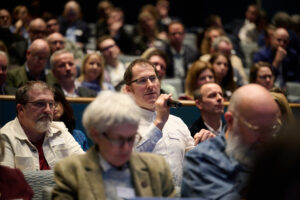 43 new members in 2025 including PriestmanGoode, Morrama, Smiling Wolf, Office 12, Manasian & Co, Carrefour, Danone and Rabobank, and member engagement remained high. Monthly Member Forums regularly attracted 70 to 100 attendees and entries for the DBA Design Effectiveness Awards surged.
Up to the Light’s annual ‘What Clients Think’ report published in association with the DBA found 83% of clients were finding it difficult to prioritise projects, with more ruthless prioritisation becoming a necessity due to time, resource and budget pressures. For many agencies this led to reduced visibility on new business.
 DBA Member Forums are a highly valued member benefit. Sharing understanding of what’s going on across the sector helps inform and reassure members in their decision-making, and eleven Forums were held for agency members in 2025. The meetings explored fundamental issues affecting design businesses today – from AI to productivity, to the client landscape – and delivered tactics to address key challenges such as new business.
Guest speakers at Forums included Win Without Pitching’s founder Blair Enns, author Alex Soojung-Kim Pang, CHEAD’s Director of Policy & External Relations, Sandra Booth, Diageo’s Global Design Director, Jeremy Lindley, Morrama’s founder Jo Barnard and Haleon’s Global Head of Experience Design, Simon Ritchie, amongst many others.
DBA Design Leaders’ Forums provide insight into the role of design across a diverse set of businesses. The meetings were held regularly throughout the year, bringing our corporate members together to discuss issues pertinent to their design teams and businesses. Five Forums were held in 2025, and the sessions included exploration of the current landscape, a detailed look at how people’s attitudes and behaviours are impacting business, and the strategic role of design in shaping the future of AI. Speakers included GE Healthcare’s Chuck Jones, LIXIL’s Paul Flowers and PepsiCo’s Marie-Therese Cassidy, amongst others.
The 11th ‘What Clients Think’ report by Up to the Light in association with the DBA launched in March with 400 delegates registering for the DBA’s official launch webinar. Based on 680 client interviews conducted on behalf of agencies, the report painted a picture of clients under pressure in terms of resources and budgets, against a backdrop of political and economic uncertainty and a rapid pace of change. However, despite the many challenges, clients remained largely positive, with 70% optimistic and confident when looking ahead to the next two years.
 Free pitching is an issue that never goes away, and as clients’ budgets squeezed, so did the pressure on agencies to free pitch. To help members protect the value they bring and get paid for the work they do, the DBA undertook a wide range of activities in partnership with Design Week, to effect industry change. The DBA stance is clear – we recommend agencies do not free pitch. It devalues what you are selling and does not produce the best solution for the client. A suite of activity on the issue was delivered in 2025 – spanning events, articles, tools and guides – offering practical and professional advice, and bringing in global experts to challenge the status quo and support agencies and design buyers to move beyond free pitching.
The DBA’s annual industry benchmarking report, produced in association with Moore Kingston Smith and kindly sponsored by Paprika and VisionFR, provides members with data they can rely on. 122 members completed the survey informing the report, which was rebranded by DBA member Baxter & Bailey in 2025 and renamed ‘DBA In Focus’. The highly valued report, and associated website of dynamic data tables, is now even more accessible for members. At the online launch of ‘DBA In Focus’, practical ways the report’s findings can support design businesses in their 2026 planning were shared with the 200 attendees. Activity around the report’s data was also expanded to include a range of associated tools and content. The guides and articles can be downloaded from the DBA’s website.
 The DBA’s Register of Experts signposts to consultants with sustained and relevant experience in supporting the design industry. The Experts are reference checked and accredited by the DBA, ensuring a quick and reliable way to identify a consultant to address a specific business challenge or help move your business to the next level – such as in the case of Forepoint, who shared their story with other members in 2025 to highlight how gross profit leapt from £1.4m to £2m in two years at their design business following the support they received from a DBA Expert.
There were 36 Experts on the Register in 2025. New joiners, including Lakmal Walawage, Zena Bruges, Manish Kapur and Ryan Munt brought expertise across IP guidance, operational performance, business development and more. Members benefited from a wide range of resources created by the DBA Experts throughout the year, tackling subjects from how to embed an impactful senior leadership team to how AI is reframing agency shortlisting, and more.
With the Employment Rights Bill changes due to come into effect, DBA members were able to keep up-to-date and maintain compliance by accessing our HR partner Croner’s free advice and HR webinars. Members also continue to benefit from free, expert advice via our partnership with HK Law, who have advised hundreds of members through the DBA’s legal advice helpline.
 A variety of DBA programmes were held online and in-person, and the association also aligned with other key industry organisations to help inspire, inform and connect design professionals across the UK and beyond. In addition to the 16 DBA Member Forums held in 2025, 34 events and training sessions were also delivered. Planning for The Design Effect, to be held at The National Gallery in 2026, also got underway.
Webinars continued to be an excellent way to inform members in any location on topical factors affecting the industry, and six were held in 2025. The events were well attended and speakers included internationally recognised industry figures, Dr Mary McBride, Olivia Salisbury, Pernilla Johansson, Blair Enns, John Gleason and more. After the live events, the webinars were added to the DBA’s online gallery which now houses over 70 previous webinars, exclusively accessible to members.
The DBA also aligned and partnered with a number of organisations in the delivery of their programmes and events. The World Design Congress was brilliantly hosted by the Design Council in September. The event was a great success, focusing the eyes of the world on UK design. The DBA supported the bid to bring the Congress to London for the first time in over fifty years, and it was fantastic to bring together leading lights in design for a relaxed evening of conversation and networking at a DBA drinks reception ahead of the main event taking place at the Barbican.
The DBA also supported the Better Future Embassy Event at the London Design Festival. Hosted by Material Matters, the event provided specific guidance on exporting, and a platform and meeting place for design studios to connect with international business opportunities. The proportion of members’ average income from overseas clients has risen 80% in the past decade, demonstrating the opportunity to look beyond the highly competitive home market for growth. Markets around the world highly value the effectiveness and quality of UK design, and the DBA is increasing support to help members grow their international reach, especially in the Indian market, and closer collaboration with the Department for Business, Innovation, Science and Trade is underway.
DBA training content is developed specifically for the design industry and delivered online by sector experts. Three new courses were introduced in 2025, including Building Balanced Client Partnerships with Joanna Anthony, PR for Design Businesses with Claire Blyth and Translating the Brief with Jonathan Kirk, with the latter workshop also aimed at our in-house design team members, and the DBA ran 21 online learning sessions in total.
We continued our valued relationship with PARK Academy, running free webinars to demonstrate how design professionals can master the change from design-doing to managing design. PARK is a world leader in design management and leadership training. Their programmes help individuals transition into senior management and leadership roles, and our partnership with PARK enables DBA members to receive an exclusive 25% discount.
My Life in Design – a collaboration between Red Setter and the DBA – has become essential industry listening, and the podcast’s seventh and eighth series launched in 2025 with guests spanning a brilliantly eclectic mix. Industry leaders from FutureBrand’s Queenie Lo, to Uncommon’s Lisa Smith, Podge’s Phil Jones to JKR’s Tosh Hall and Creative Boom’s Katy Cowan shared their wide-ranging fascinating journeys into design, and a number of live-audience events also proved very popular in New York, London and Barcelona.
The opportunity to be paired with some of the most respected and esteemed figures in design for a twelve-month, one-to-one mentoring journey continues to take the Twenty/Twenty programme from strength to strength. Twenty/Twenty is the industry’s longest-running, most respected mentoring programme, harnessing the wisdom and vision of current leaders in the design industry to inspire the next generation to take their leadership to the next level.
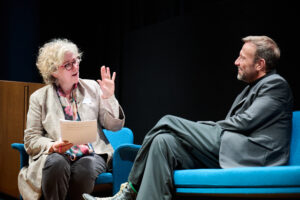 Proving the effectiveness of your past work raises your profile, builds trust in your capabilities and defends your ground on fees and budget. That’s why, in 2025, we gave every DBA member one free entry to the DBA Design Effectiveness Awards – the most robust effectiveness awards for design – and provided additional content and support for members to aid their ability to gather data, build case studies and understand how to properly articulate the results of their work.
Many members utilised our free effectiveness consultations and there was a significant uplift in DBA Design Effectiveness Award entries. The sectors and disciplines represented among the submissions broadened too and 45 judges, representing a cross-section of industry, reviewed the entries across three rigorous rounds of judging chaired by Sean Carney. The shortlist of 40 winning projects submitted jointly by agency and client, was announced in October, with the Gold, Silver and Bronze winners to be announced at The Design Effect in March 2026. The breadth of the winning work, and the wide-ranging impacts it has delivered, will enhance the DBA’s ability to champion the value of design in all areas of business and society.
Following the huge success of the inaugural The Design Effect event in 2024, it was exciting to get planning underway in 2025 for the next iteration in March 2026. The iconic National Gallery in London was secured for the venue, with dinner to take place amongst masterpieces in the magnificent Wohl Room. Ticket bookings opened, and speakers were confirmed including, amongst others, World Design Medal winner, Dr Patricia Moore and Samsung’s President and CDO Mauro Porcini, in his first European speaking engagement since joining Samsung. Early-bird tickets rapidly sold out, and The Design Effect promised to make its mark on the design calendar once again, exploring and celebrating the impact of design.
The design industry across the UK needs a constant flow of great entry-level talent, but that pipeline is under threat. One of the issues that we keep hearing, is that members struggle to recruit industry-ready graduates, and perhaps more worryingly, their creative acuity is lacking.
Shaping a design industry skills system fit for the future is a priority for the DBA to ensure the sector has the talent it needs to continue to flourish. In partnership with the Council for Higher Education in Art & Design (CHEAD), we carried out extensive exploration of the challenges in 2025. The DBA’s CEO attended and spoke at CHEAD’s annual conference, and together we held five roundtable discussions, including in Bristol, London and Manchester, and for the Scottish design sector, to explore how education and industry can collaborate to strengthen and secure the future of great design talent. The resulting report was published in 2026 and will form the basis of further work with CHEAD.
 “To raise the profile of our sector and champion the value of design, I spoke at key industry events in the UK and abroad including the DMI’s Design Management Conference in Amsterdam, The Future Of… conference in Chicago and the Design in Innovation Summit in Liverpool. Since the DBA took on the interests of the British Industrial Design Association in 2024, we’ve been looking into the challenges and opportunities for the industrial design sector. The rise in government-funded innovation organisations is undercutting and/or displacing work that could have gone to design consultancies and the DBA is working to raise awareness in Government. My thanks to our working group chaired by Phil Johnstone.
The DBA was asked by the Department for Business, Science, Innovation and Trade to advise on ways to grow design in the UK, and we are looking to further work with the department in 2026. I was also appointed to BEDA’s MADres Advisory Board, to bring my understanding of the UK and European design sectors to the initiative. BEDA has over 50 members from 28 countries, including the DBA, and MADres will help enable governments across Europe to integrate design into policy agendas. My work with BEDA and my position on Creative UK’s Council, supports the DBA in its aims to advance and champion UK design and the interests of our members – ensuring that design is understood, recognised and valued.
In a world that increasingly drives division, the DBA community is more connected than ever. We are at the heart of the conversations that matter for our industry, championing the value of design, advocating for the prioritisation of creative education, protecting industry competitiveness, and supporting leadership in the technological and environmental priorities facing our world.
The DBA will continue to spearhead these discussions, representing members’ interests and furthering the recognition of design, to deliver real-world benefits now, and for the future.”
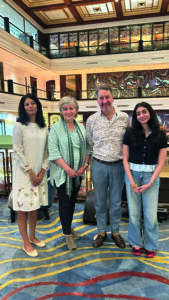 The long-awaited UK-India Free Trade Agreement (FTA) came into effect on 15 July 2026 and the DBA was commissioned by the Government’s Department for Business, Innovation, Science and Trade (DBIST) to advise on the opportunities this brings the UK design sector.
In partnership with Mark Hannant, Co-Founder of DBA member business Indigo CPO, DBA Chief Executive Deborah Dawton went on a fact-finding trade mission to India this July, focusing on the areas of Mumbai and Ahmedabad – meeting UK businesses already active in the region, Indian companies with international footprints, Indian institutions that advocate design skills and design businesses operating in India.
The Horn OK Please report launched on 1 October, advising on the opportunities created by the UK-India Free Trade Agreement, and design’s role in maximising shared prosperity.
The report goes beyond a view of design and communications services as exports.
It considers them as enablers of business success. This view significantly expands the potential scope of creative services in the UK-India corridor. It offers UK design and communications businesses a way to contribute to India’s growth by identifying routes into key sectors.
 Those include infrastructure, energy, water, manufacturing, technology, defence, aviation, travel & tourism, healthcare, and retail. All those sectors need industrial design, UI/UX, service and experience design, branding, packaging, storytelling and communications design.
These are things at which the UK excels.
 The Horn OK Please report looks at the role of design and communications not just as exports to be tallied but as enablers and multipliers of business success.
Through that lens, the report identifies ways in which the UK and India can build partnerships that will contribute to the growth, wellbeing, and shared prosperity of both economies.
The report includes a section highlighting the immediate prospects in several key sectors that are important to both countries and a short list of recommendations.
Download your copy of Horn OK Please.
Its impact will be greater with Government support. We offer the following proposals for consideration by Government:

 This was Deborah’s first visit to India. “The people and food were warm and welcoming. The honking a soundtrack.”
Trucks are everywhere — their colourful backsides emblazoned with the sign ‘Horn OK Please’. Hand painted versions adorn tens of millions of trucks across this vast country. It is an art form, symbol of economic history and a call to action.
Deborah captures the experience in six lessons:
Lesson one: Mumbai’s beautiful airport has a level of decorative detail that gives a hint of India, but I fear airport design has been largely influenced by global norms. Should it be? There were families sat in large groups on the ground, having a day out to welcome their loved ones back. I don’t think the architect planned for that. Let us encourage India to find her design signature.
Lesson two: I envy the multigenerational living and interdependence. We strive for independence in the UK. Individual desire and drive are celebrated. I see more love and care in India. Bring that into design and we will deliver exceptional products and services that work for people, because of our love of people.
Lesson three: Fix-it culture. I saw a 30-year-old rickshaw being propped up by two men while another tinkered underneath it. No taking the vehicle to the garage and waiting three days for a call. There was a queue and you got your fix the same day. Designers need to be designing more responsibly and more sustainably.
Lesson four: Few roads have lane markings. Those that do are ignored. There is no inside and outside lane. But there is something of a ballet to how this all works. Those of us used to order on our roads will want to bring order to this. Let us not assume that our lived experience is what will work somewhere else. Context is everything. Think of a road hazard in the UK — the silent electric car that we do not hear coming. What can we learn from Mumbai’s city soundtrack that could solve that problem for us?
Lesson five: What in the UK do we need to bring back? What do we need to unlearn? In the name of progress have we cast aside roles and traditions that would in fact solve some of today’s problems?
Lesson six: I saw roads built around trees or trees sat in the middle of pavements, trunks as broad as the pavement. In some places painted trunks and in others, string beautifully woven around their bases. I saw a respect for a species that is all too often in the way in the UK. India is not getting this all right, but its level of respect for living things is something we should adopt in design. How can we design with a mindset that builds and makes better and does not extract and waste?
The report would not have been possible without the financial support from the Department for Business, Innovation, Science and Trade and the cooperation of the organisations and individuals who were generous with their time in Ahmedabad and Mumbai.